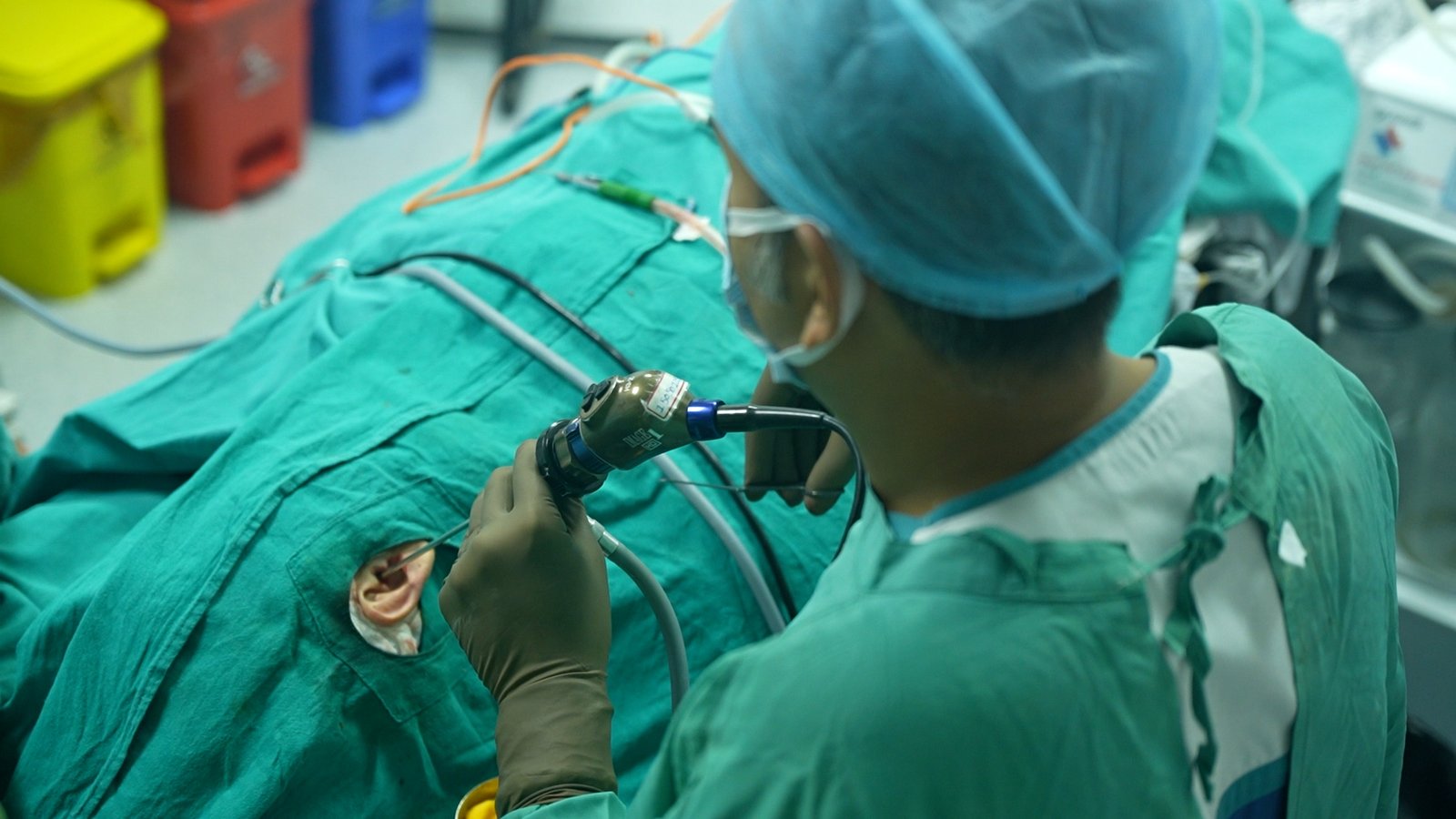
Ear surgery is a general term that refers to the surgical procedures done to treat diseases and abnormalities of the ear. Surgery can include eardrum repair, reconstruction of hearing mechanisms, removal of infections, treatment of cholesteatoma, or correction of structural abnormalities.
The type of surgery recommended depends on the underlying diagnosis and the patient’s specific needs.
A comprehensive evaluation will determine if surgery is the best treatment option.
Improved Hearing
Many ear surgeries help restore hearing and improve communication.
Elimination of Chronic Infections
Removes infection and prevents recurring ear problems.
Repair of Damaged Structures
Restores normal ear anatomy and function.
Prevention of Complications
Protects against further hearing loss and serious ear conditions.
Better Quality of Life
Improves confidence, communication, and daily activities.
Long-Term Ear Health
Promotes healthier ear function and reduces future problems.
The ENT surgeon will discuss the symptoms, examine the ear and may suggest hearing tests or imaging studies.
Medical fitness and surgical planning are done before the procedure.
Depending on the type of surgery, the procedure can be done under local or general anesthesia.
The surgeon uses advanced microsurgery techniques to repair, reconstruct or remove diseased tissue.
Postoperative care instructions are given, and regular follow-up evaluations are done to assess healing.
The recovery time will vary depending on the type of ear surgery.
Following your surgeon’s instructions is important for the best possible recovery.
Helping you make informed decisions about your ENT care.